THE ANT-PLANT PROJECT
Participants: Ashley Field (Aust. Trop. Herbarium, JCU), Leesa Baker (JCU), Katya Reichart (Germany), Melinda Greenfield (JCU), Lori Lach (JCU) and Joe Holtum (JCU).
Prologue: For 7 weeks in June and July 1770, His Majesty’s bark, Endeavour, under the command of Lt. James Cook, was careened for repairs near what is now Cooktown in north Queensland.
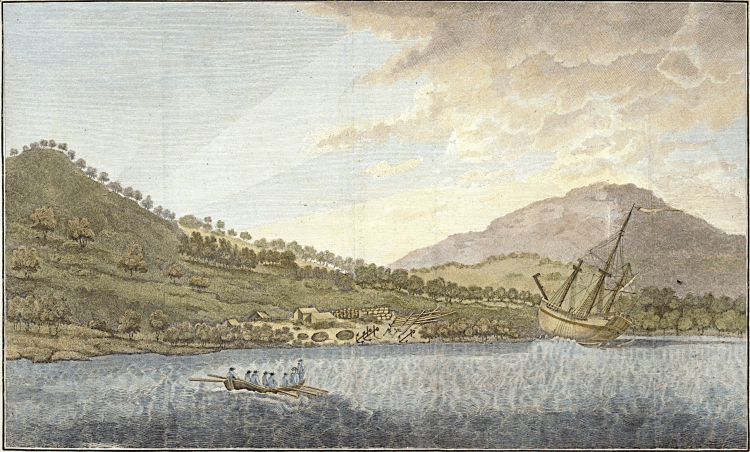
During the stay, the expedition’s naturalists, Joseph Banks, Daniel Solander and Herman Spöring Jr., collected over 200 species of plants. Among them was an ant-plant, a bizarre-looking epiphyte with a bulbous stem-base. Sydney Parkinson, artist to the expedition, made a sketch.
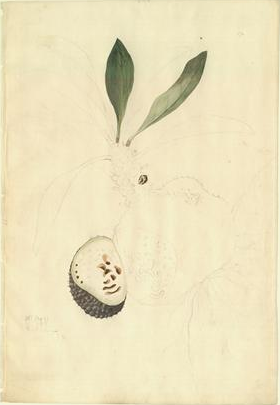
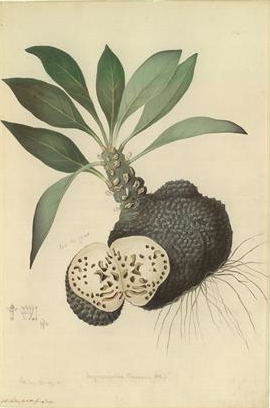
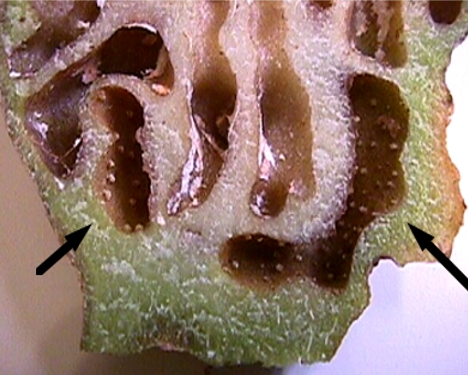
We know now that the north Queensland tropics host five ant-plant taxa in the family Rubiaceae, Hydnophytum ferrugineum, H. moseleyanum, Myrmecodia beccarii, M. platytyrea ssp. antoinii and M. tuberosum, about 6 % of the species attributed to these genera. All the species are epiphytic, sport bulbous stem-bases containing chambers connected to the stem surface. The chambers may harbour ants.

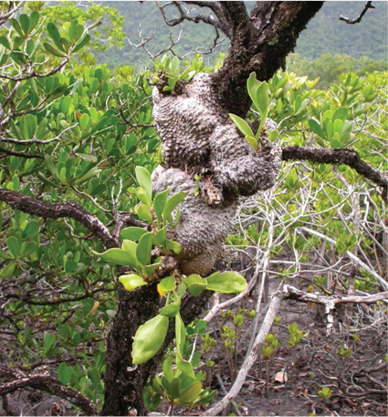
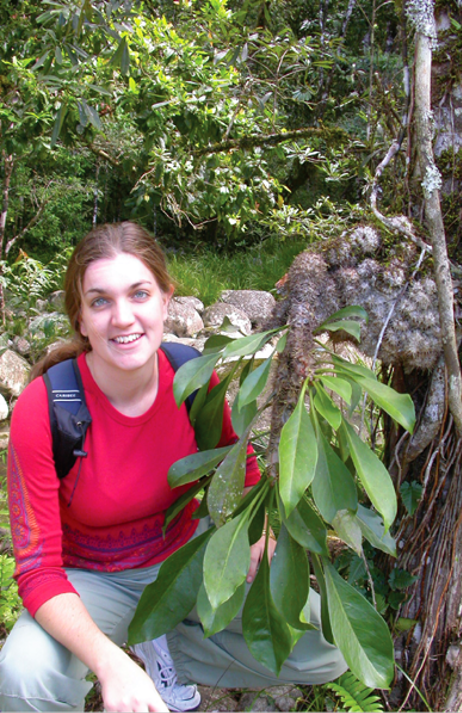
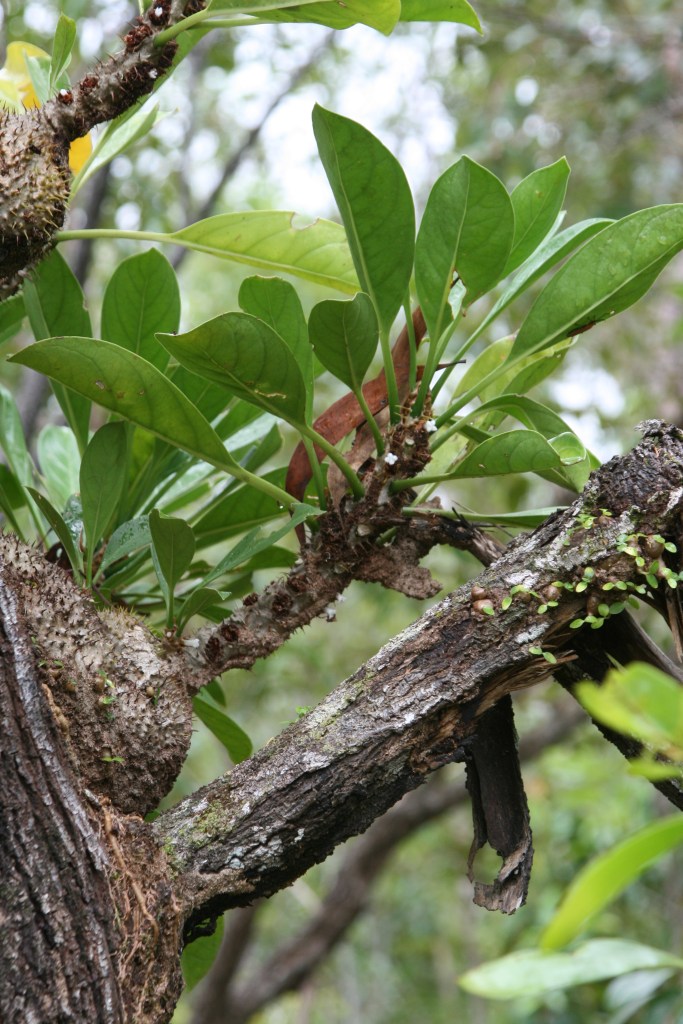
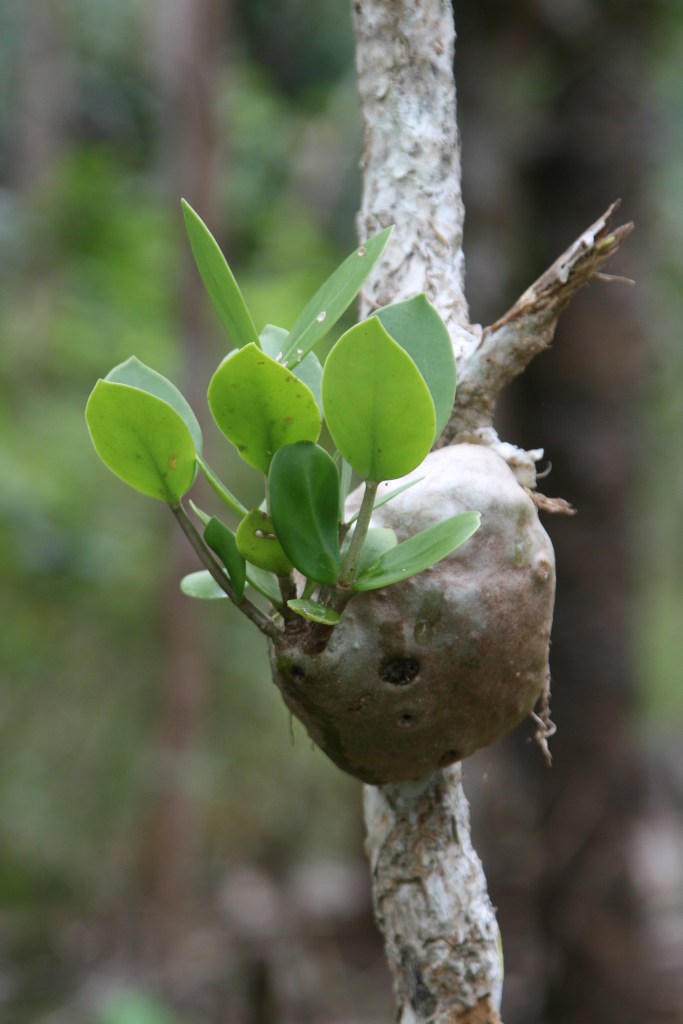
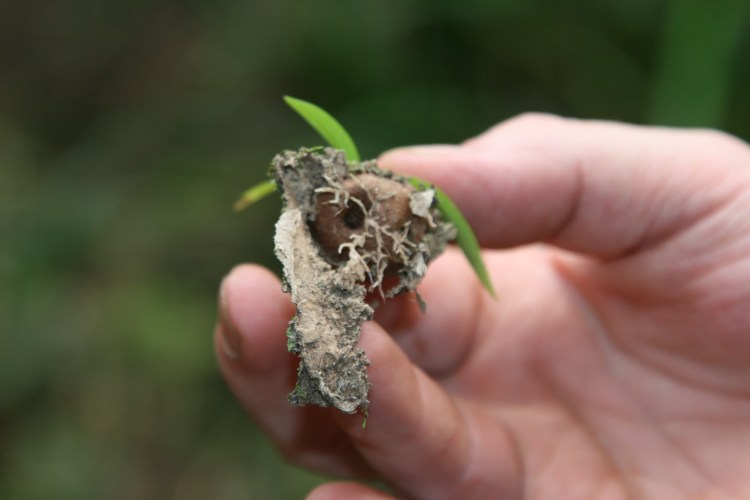
The ants, often Philidris cordata (sub-fam. Dolichoderinae) in Australia, tend to inhabit smooth-walled cavities in the stems and store wastes in cavities with walls that contain warty lenticel-like protrusions. There is good evidence that ants may assist dispersal, at least on a single tree, by transporting viable seeds away from the parent (Sommer 1979, Chomicki and Renner 2016). Seeds are sometimes incorporated into frass-covered pathways that the ants construct on the stem of the host tree.

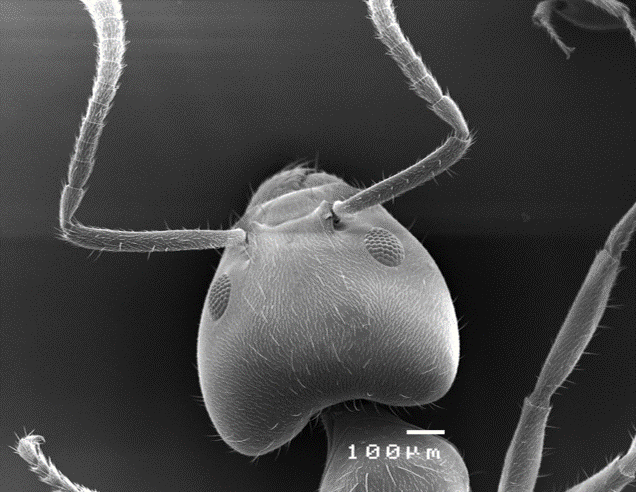

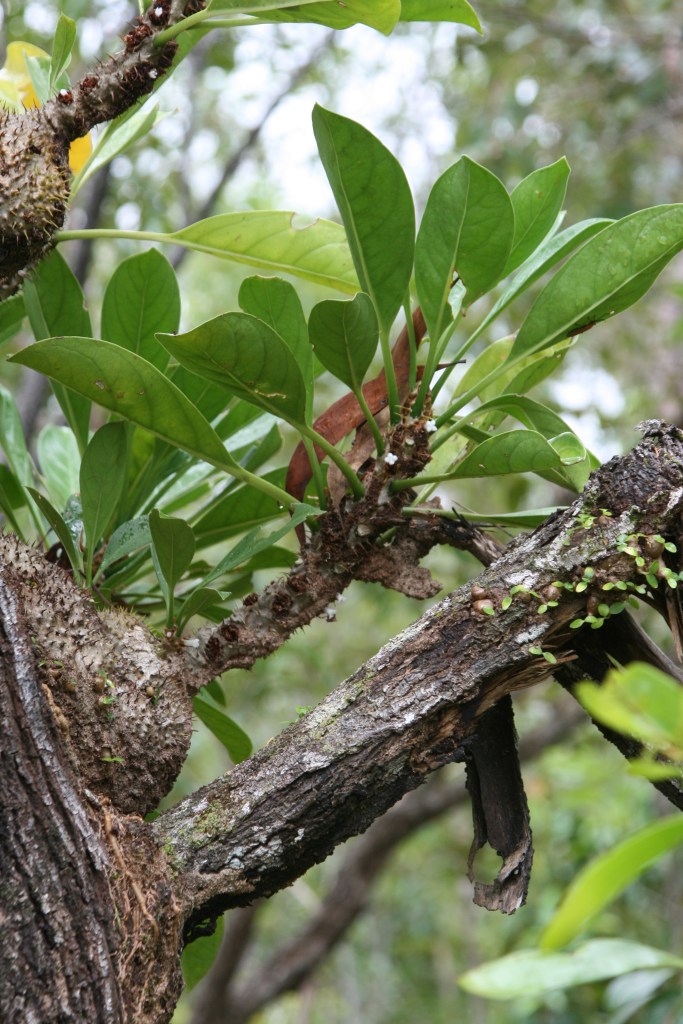
Ant-plants often interact with organisms apart from their host trees and ants. For example, the mistletoe bird (Dicaeum hirundaceum, fam. Nectariniidae) is thought to eat fruit and to move seeds between trees. Mymecodia beccarii often grows with epiphytic orchids, Dischidia and ferns, and occasionally hosts larvae of the southern subspecies of the Apollo jewel lycaenid butterfly, Hypochrysops apollo apollo. Myrmecodia tuberosa may host larvae of the northern Apollo jewel, Hypochrysops apollo phoebus.
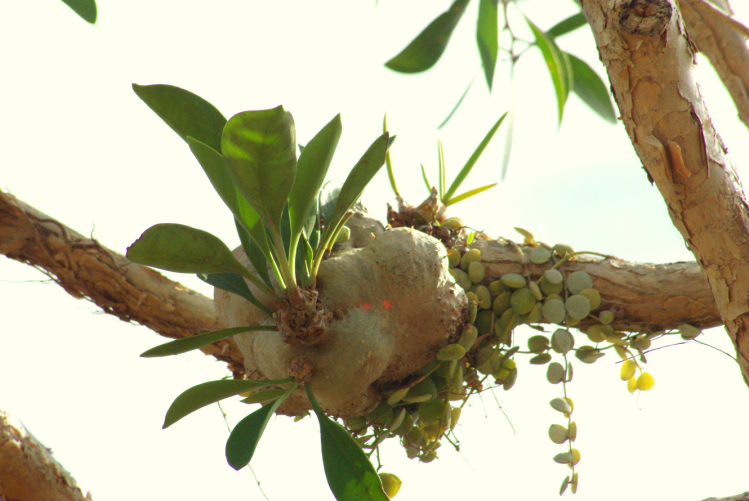
Co-occurance of M. beccarii, Dendrobium canaliculatum and Dischidia nummularia on a Melaleuca, Cardwell 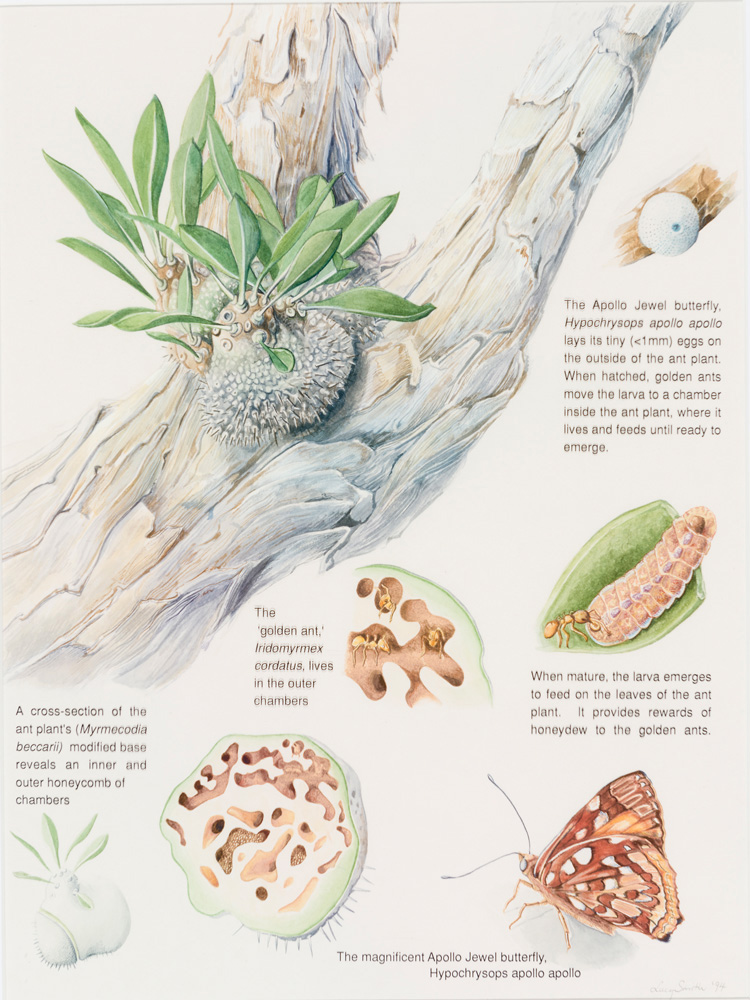
Life-cycle of the southern Apollo jewel (Hypochrysops apollo apollo) on/within a M. beccarii attached to a Melaleuca. Irodomyrmex cordatus is now Philidris cordata. Illustration: LT Smith, watercolour on illustration board with printed overlay purchased by the Botany Department for the James Cook University Art Collection 1994. 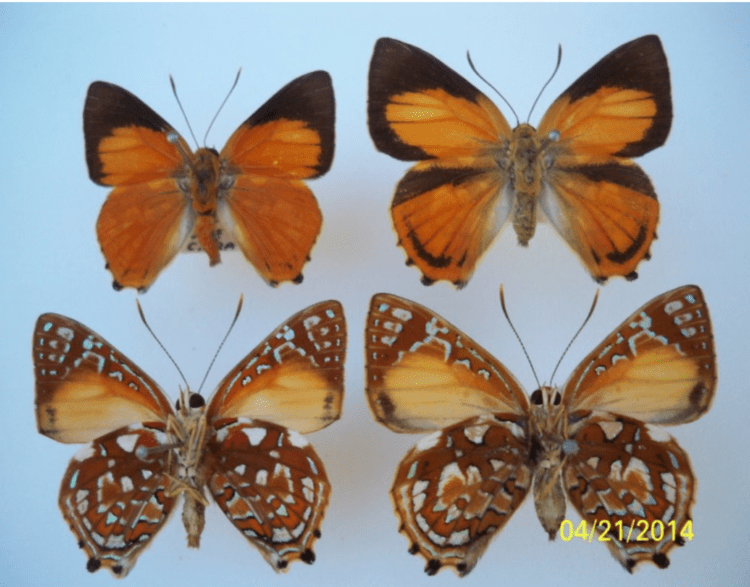
The southern Apollo jewel subspecies, Hypochrysops apollo apollo, from Annan River, Cooktown
(JT Moss http://www.boic.org.au/files/Apollo%20Jewel)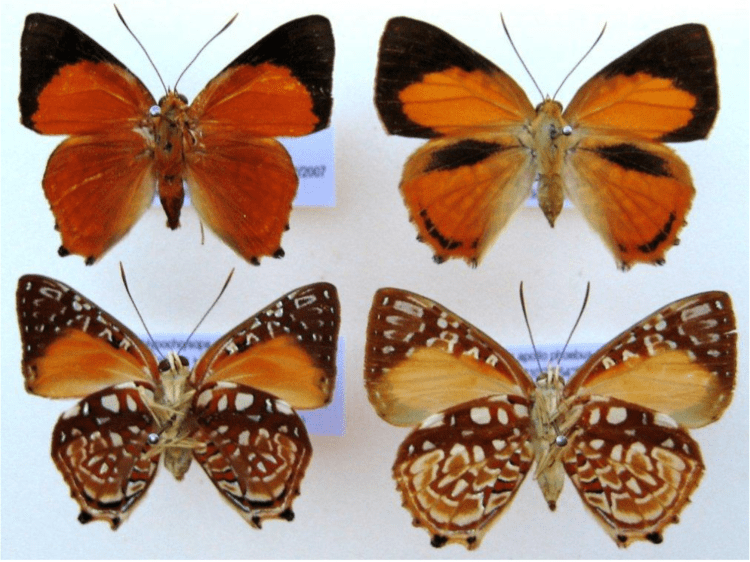
The northern Apollo jewel subspecies, Hypochrysops apollo phoebus, from Iron Range
(JT Moss http://www.boic.org.au/files/Apollo%20Jewel)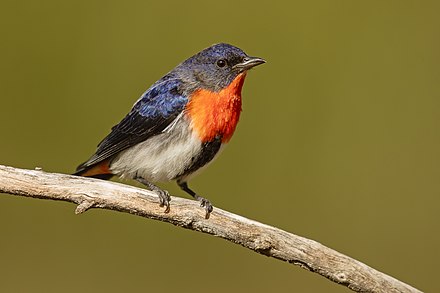
Male mistletoe bird (Dicaeum hirundaceum) in breeding season plumage
Other non-rubiaceous Australian epiphytes with ant-house morphological adaptations include Dischidia major (fam. Apocynaceae) and the fern, Lecanopteris sinuosa (fam. Polypodiaceae).
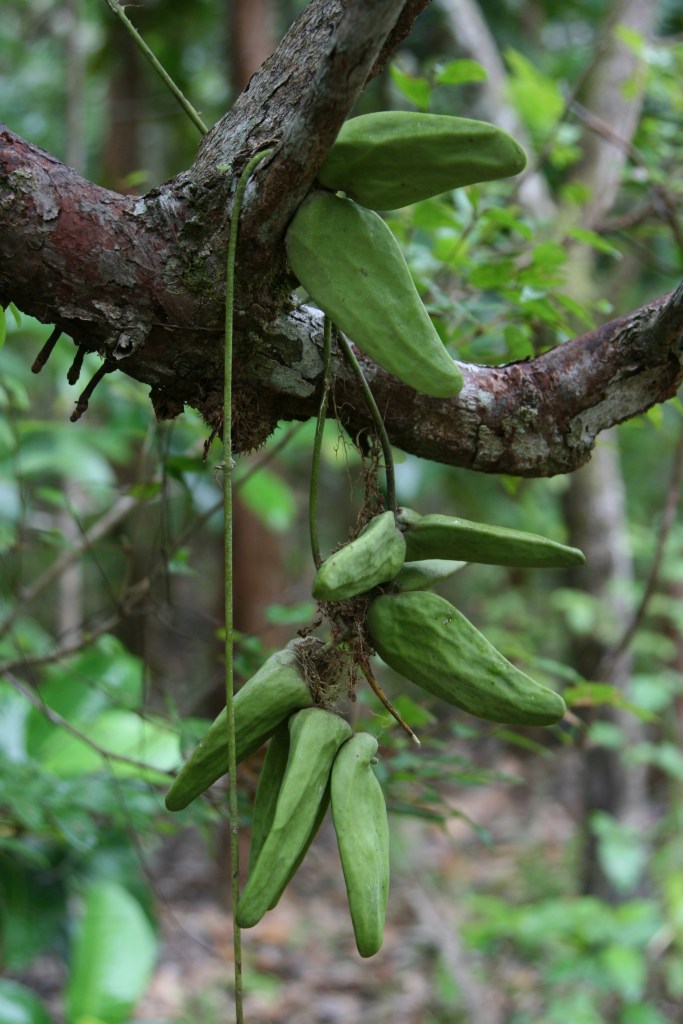
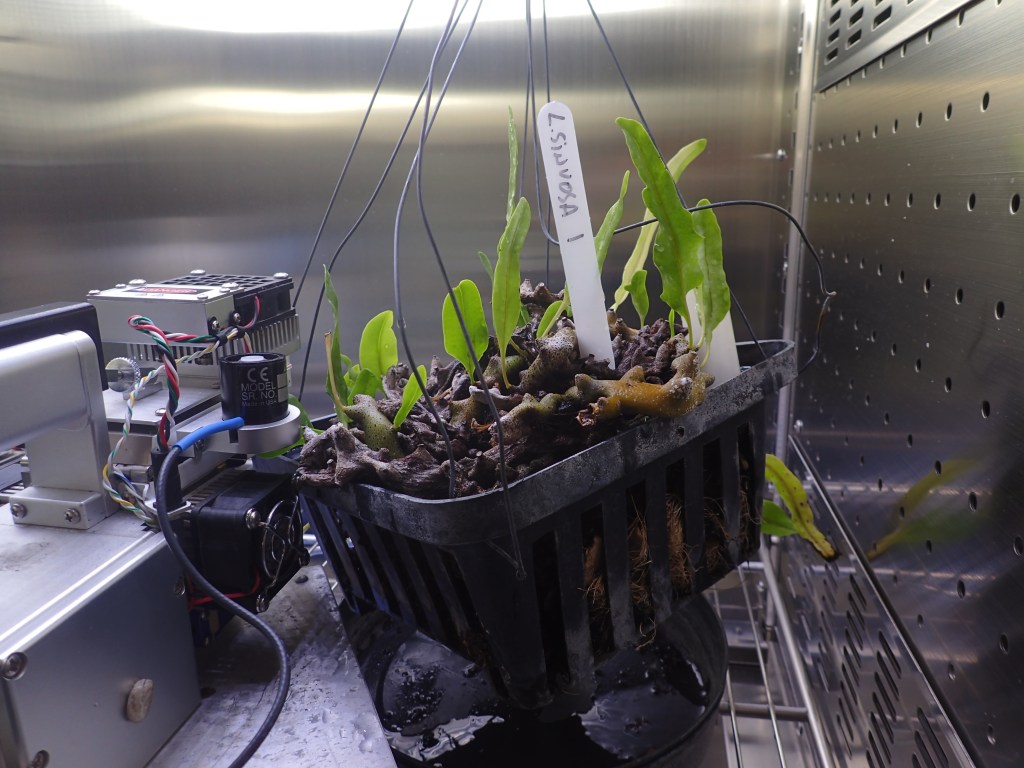
Project: We aim to quantify the expression of CAM in Australian ant-plants and to explore the interactions between habitat, CAM expression and other aspects of ant-plant ecology such as identifying mutualistic ants, understanding nutrient flows, and uncovering their relationships with other epiphytes and with fungi that grow inside the stems. We began this project in 2007.
Progress: CAM has been detected in all of the rubiaceous ant-plant taxa as well as in Dischidia major and Lecanopteris sinuosa. The extent of CAM expression differs.
 Joe Holtum's Science Site