THE BULBINE PROJECT
Participants: Joe Holtum (JCU), Klaus Winter (STRI), Nic Venter (Witwatersrand, RSA)
Project: To survey Australian and African Bulbine (Asphodelaceae) for CAM photosynthesis, comparing any expression of CAM.
Thoughts behind the project: In CAM-containing lineages that move between continents, say from Africa to Australia or to New Zealand, and subsequently speciate there, is there evidence for limitations in the extent of CAM expression in the species in the new continent? If so, is this due to genetic bottlenecks, habitat conservatism in the new home, and/or perhaps climate characteristics?
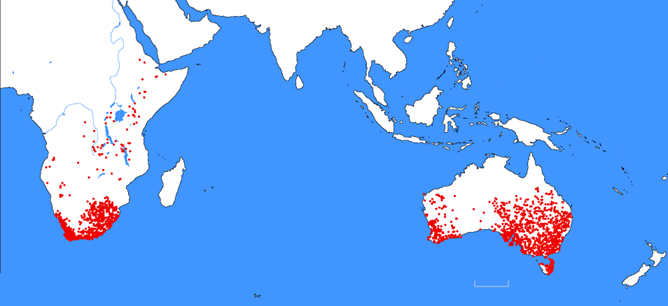
World distribution of Bulbine (GBIF 2024)
Progress: we have measured CO2 exchange and day-night leaf titratable acidity during watering, droughting and re-watering cycles in four Australian species (of 8 described) and two African species (of ca 79 described). Low level CAM has been detected.
This project will take a while. Growing plants with sufficient numbers of leaves of comparable physiological ages for statistically relevent sampling, particularly of the succulent species, is not a trivial undertaking!
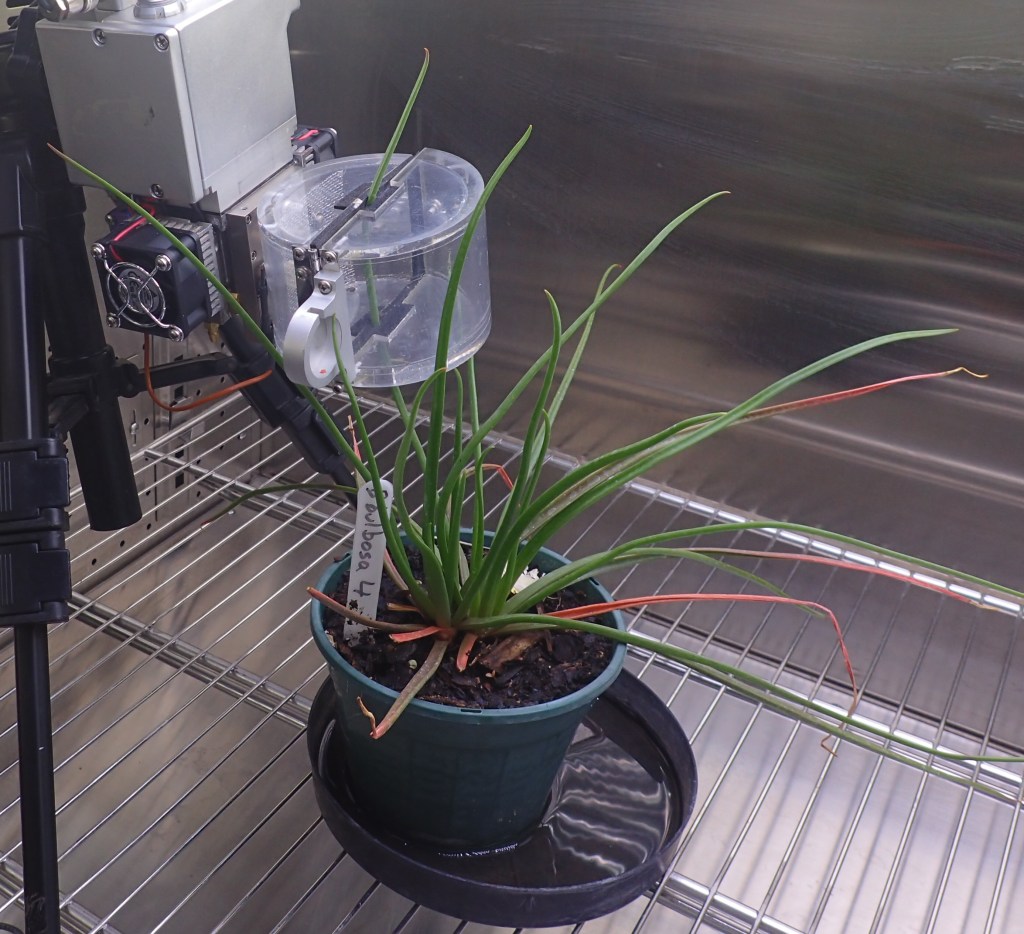
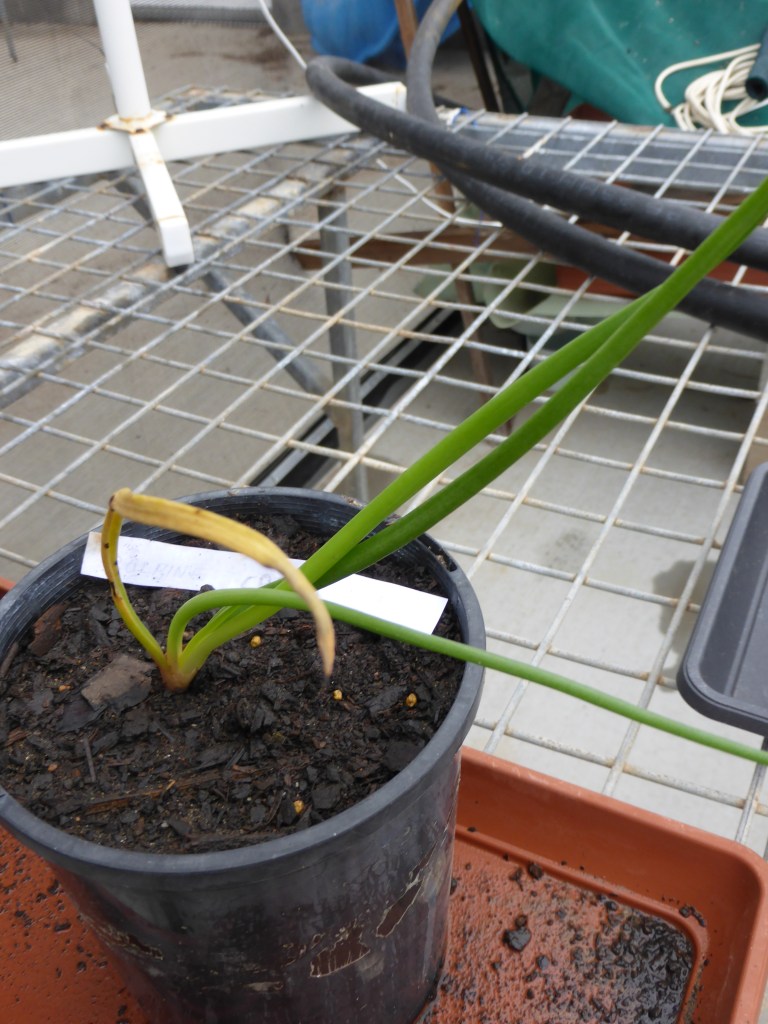


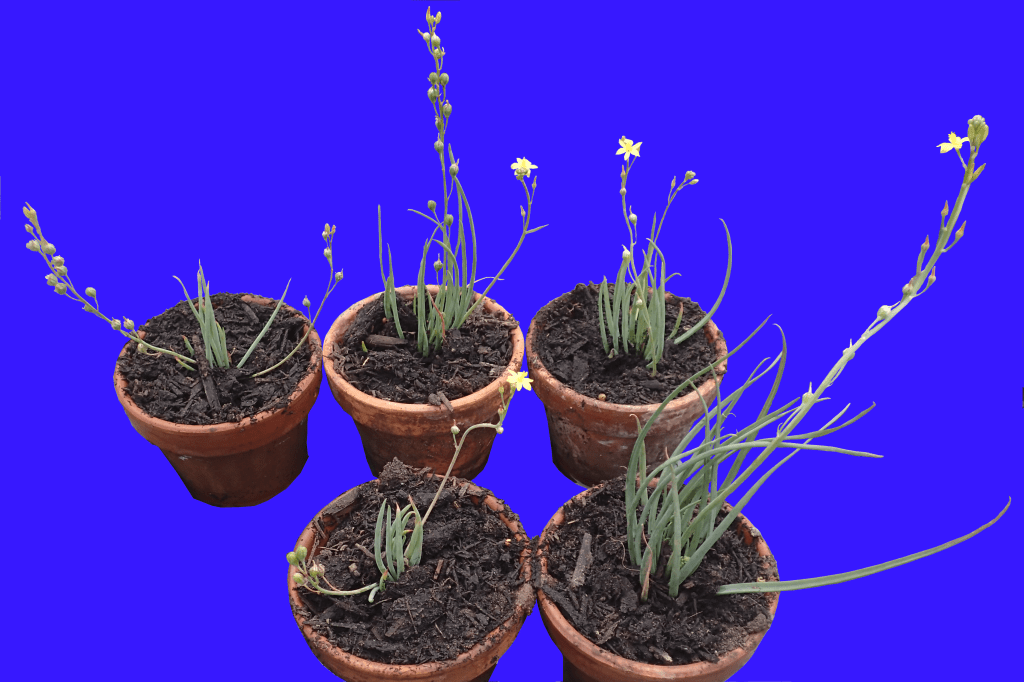
I am now starting to grow some African Bulbine, including B. alooides (L.) Willd., Bulbine asphodeloides (L.) Spreng., B. frutescens (L.) Willd., B. mesembryanthemoides Haw., B. triebneri Dinter and B. succulenta Compton. Growing and sampling B. mesembryanthemoides in the gas-exchange chamber is a challenge. The swollen leaves, which contain little chlorophyll, abscise extremely readily making chamber sealing, and maintaining the seals, so difficult that I am considering dropping this plant from my study.
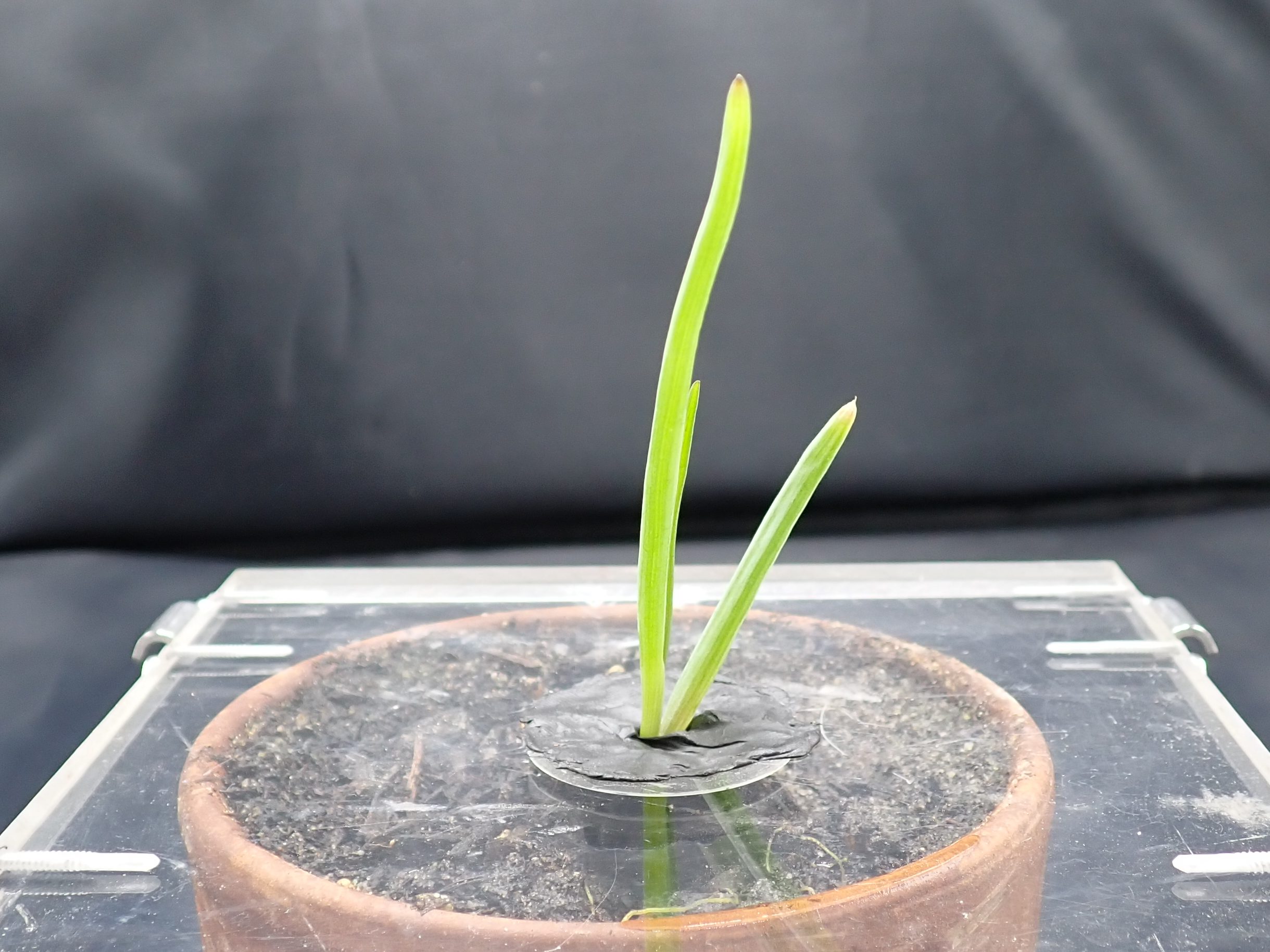

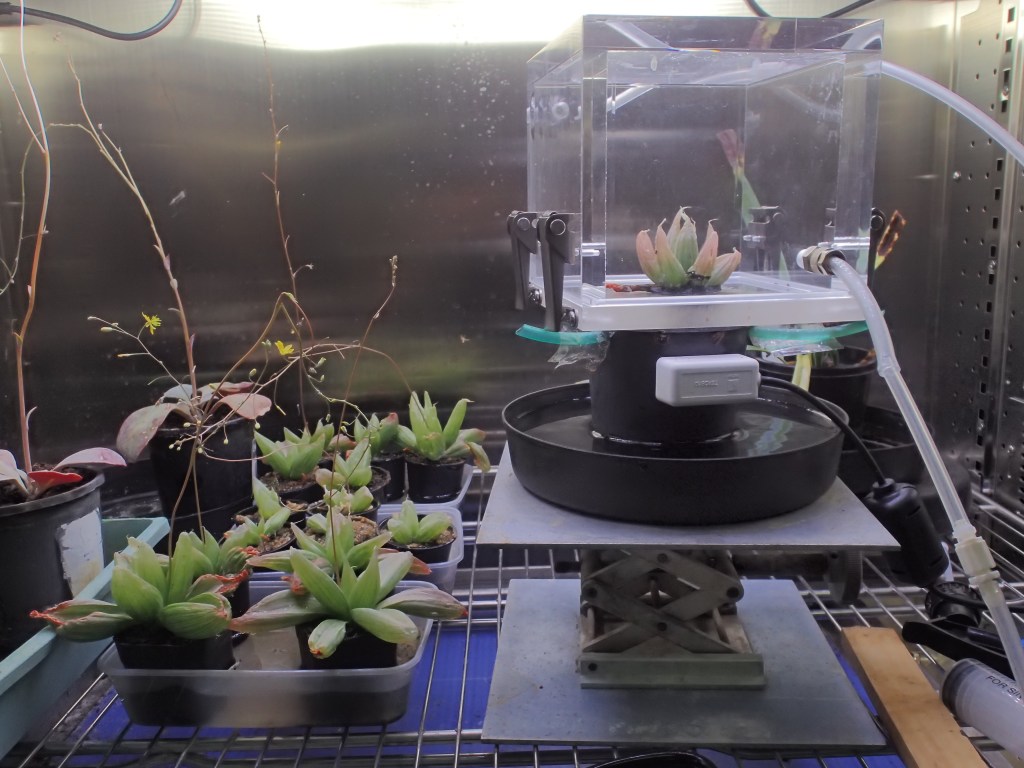
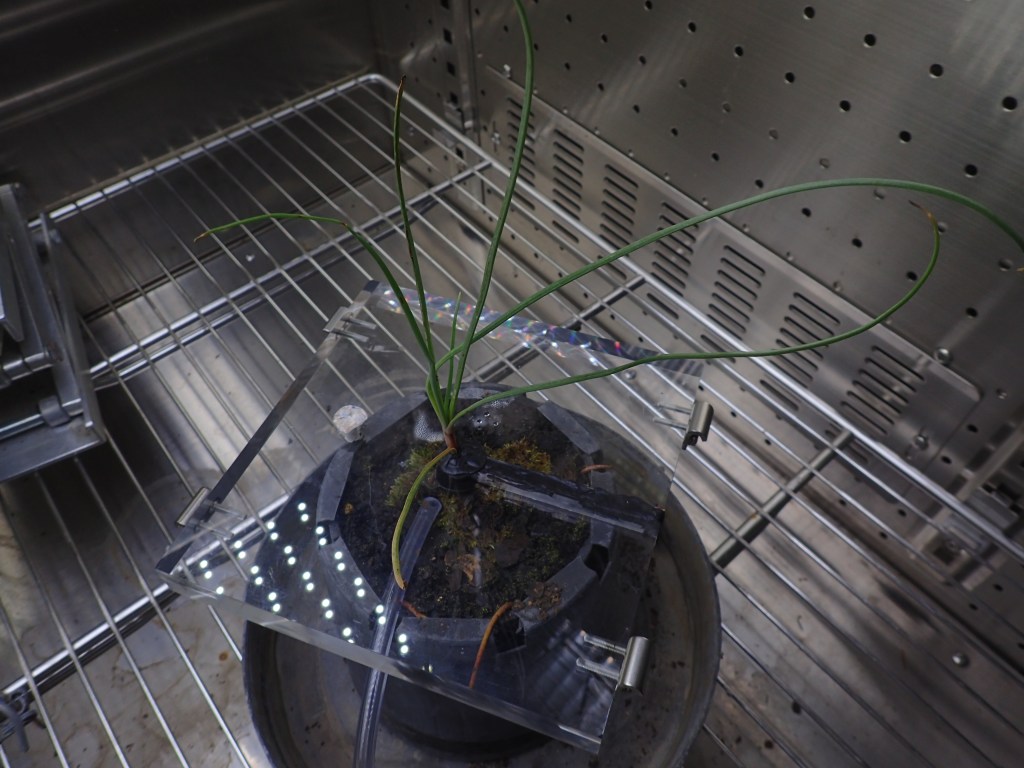
Below is a CO2-exchange trace for the Australian arid landscape annual B. alata. CO2 uptake is mainly in the light as in a normal C3 plant but the curved trace at night, when plants are well-watered (green background) or droughted (white background) under constant temperature is consistent with a low level of obligate CAM-type dark CO2 fixation i.e. the trace indicates a C3-CAM species. CAM needs to be confirmed by demonstrating nocturnal acidification fo the leaf tissue.
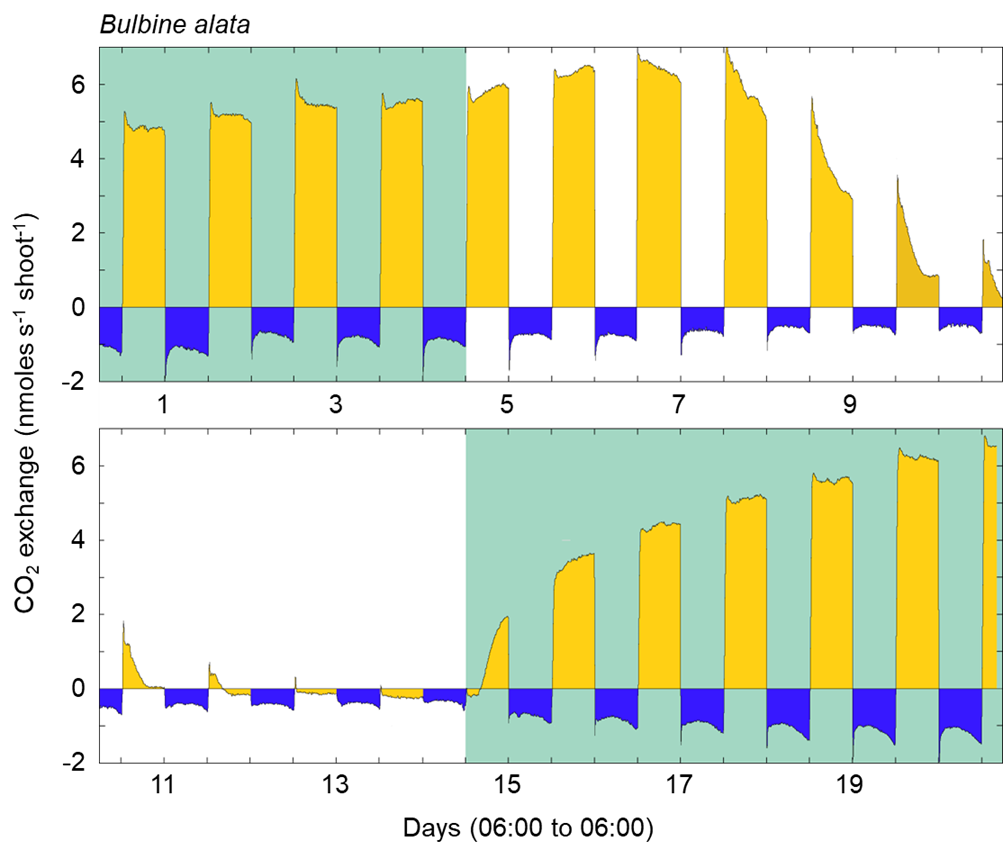
Twenty days of CO2 exchange by Bulbine alata either watered (green) or unwatered. Night exchange is in blue, day exchange is in gold. 12 h, 26oC day/ 12 h, 20oC night. Dewpoint of 17oC. Note the curved shape of CO2 exchange during the dark.
 Joe Holtum's Science Site