VIGNETTES OF TWO TRIPS TO IRON RANGE
I visited Cape York’s Iron Range in 2010 (with Yarn Woodrow and Teddy Tsen) and 2017 (with Simon and Max Robson and Terry Reardon) to study ant-plants and Ryparosa, and bats respectively. It is a beautiful, remote part of Australia that contains areas of tropical heathland (an understudied vegetation type in Australia) and Australia’s largest remaining area of lowland rainforest.
Located in the Lockhart River Aboriginal Shire and Cook Shire on the eastern side of Cape York north of Lockhart River Community (map below), much of the Iron Range and adjoining coasts is in the Kutini-Payamu National Park (https://parks.des.qld.gov.au/parks/kutini-payamu). Kutini-Payamu is a CYPAL park (Cape York Peninsula Aboriginal Land) that is jointly managed by the traditional owners, the Kuuku Ya’u people (including the Kungkay and Kanthanampu peoples) and the State of Queensland, with indigenous freehold as the underlying tenure. For historic and cultural information about the area go to https://lockhart.qld.gov.au/our-history/.
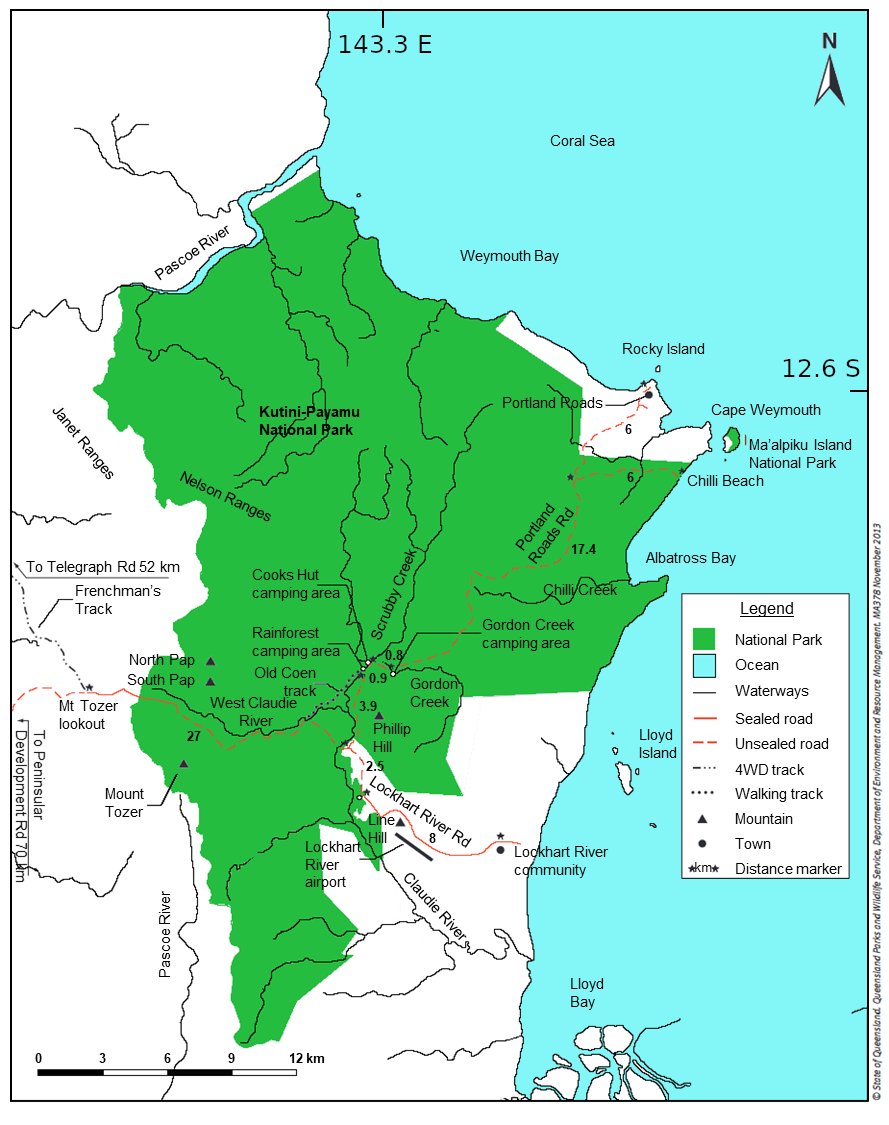
The topology, soils and vegetation of Iron Range reflect the weathering of original Carboniferous volcanics, subsequent metamorphic welded tuffs, and even younger granite intrusions.
Rainforests on the low country to the east below the escarpment grow on richer soils derived from the older volcanic rocks.
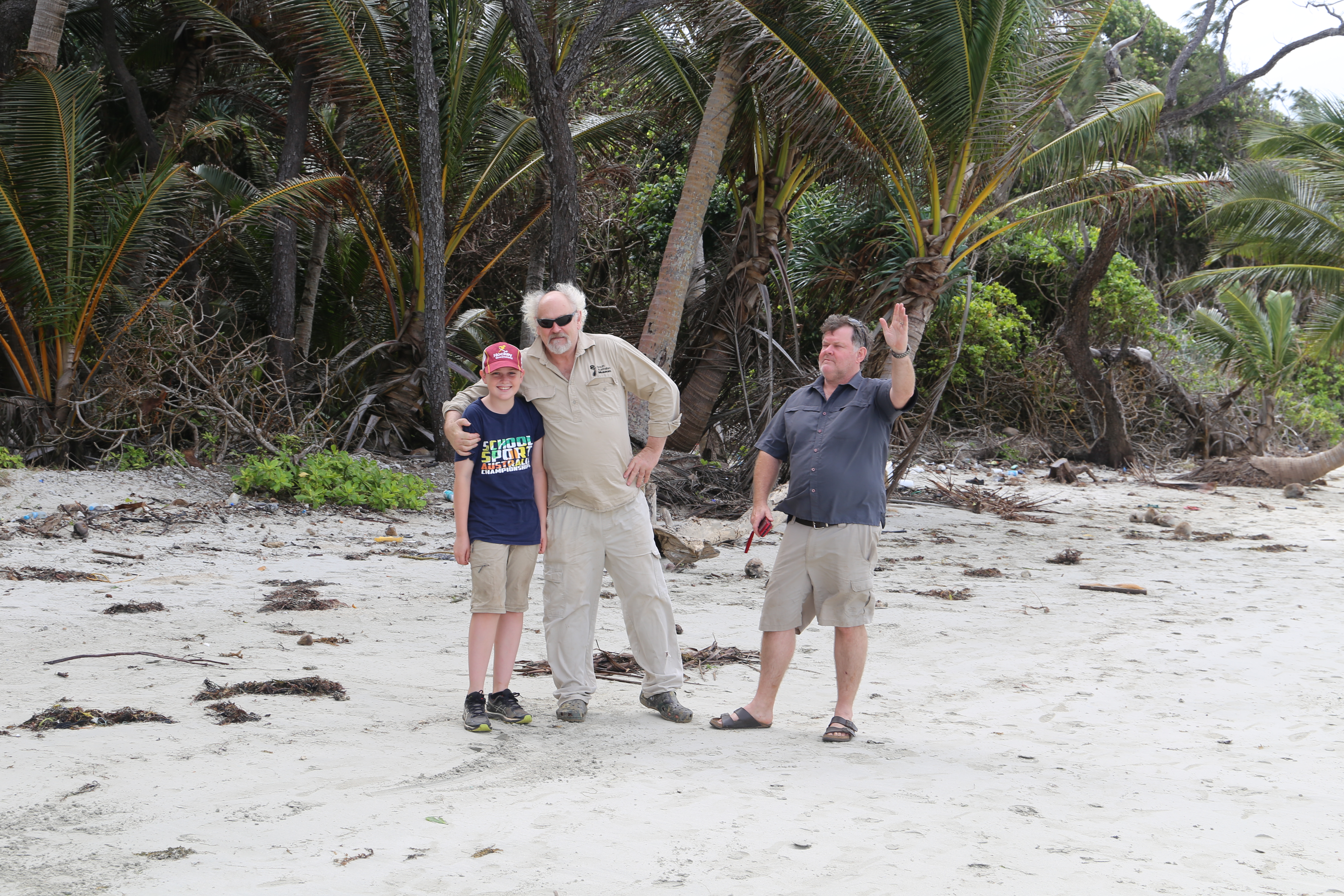
White quartz sand between Cape Griffith and Cape Weymouth, such as that at Chilli Beach, is backed by an extensive dune system that rises to 40 m above sea level and supports evergreen notophyll vine forests. The sand derives from the coarse-grained granite intrusions.

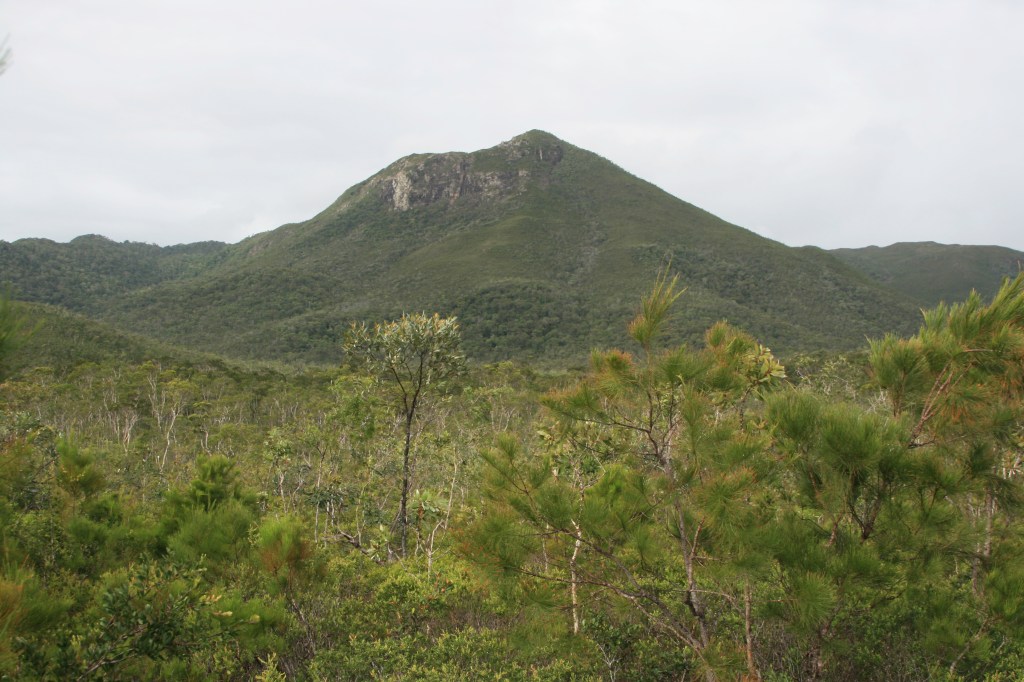
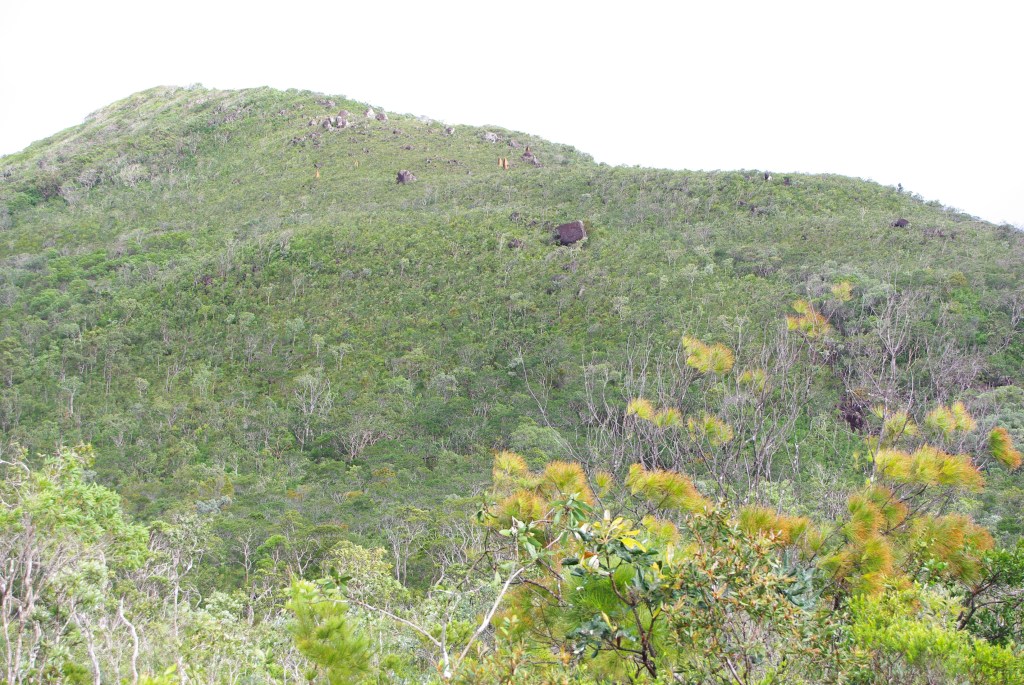
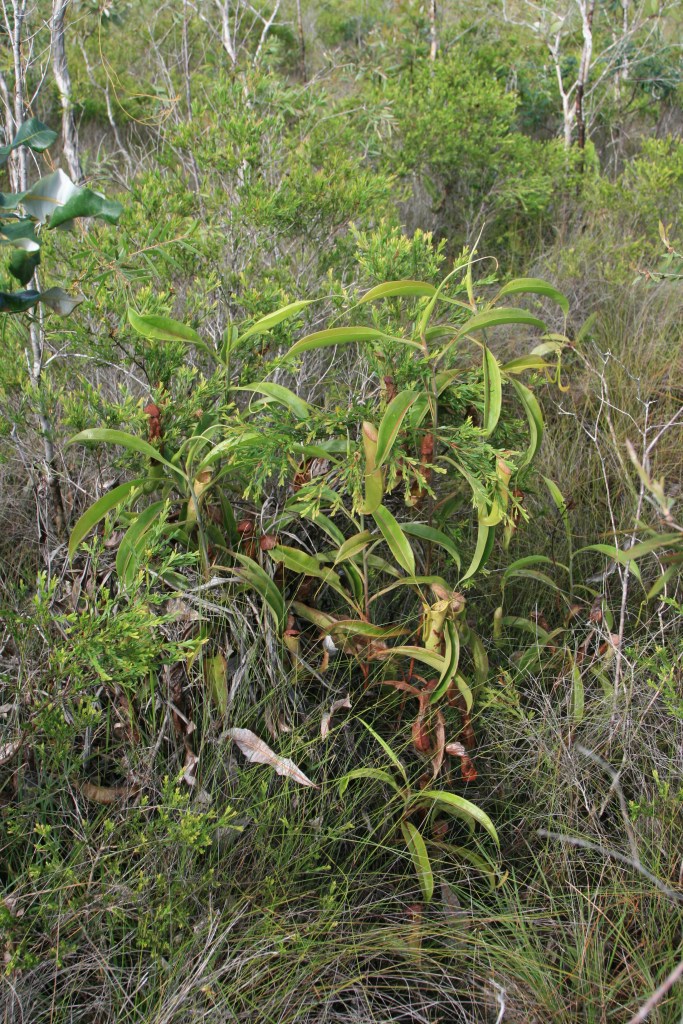
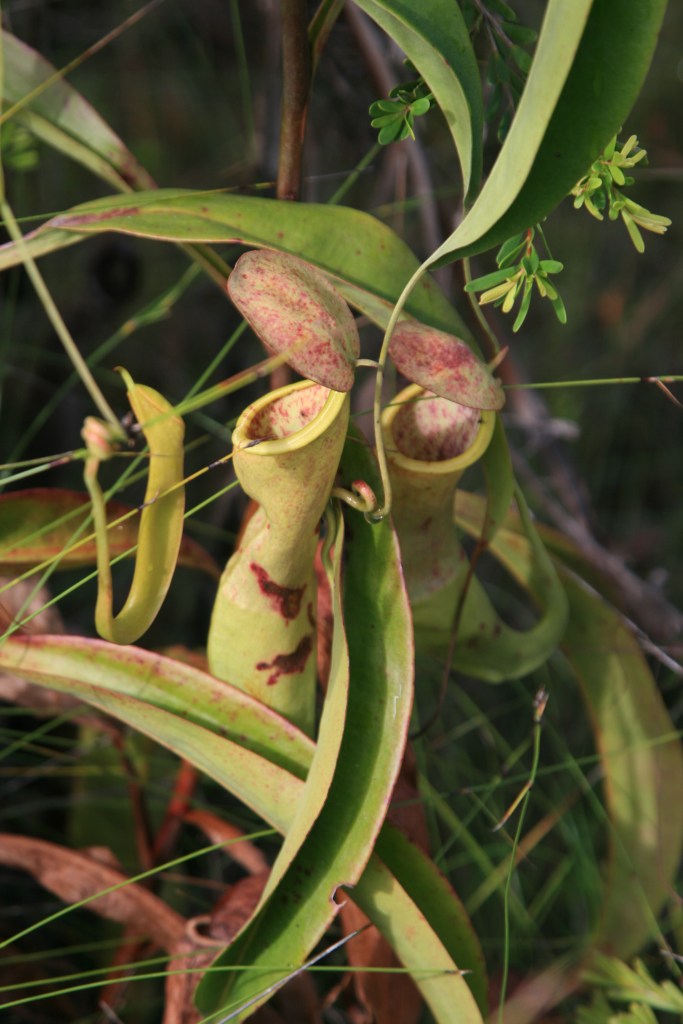
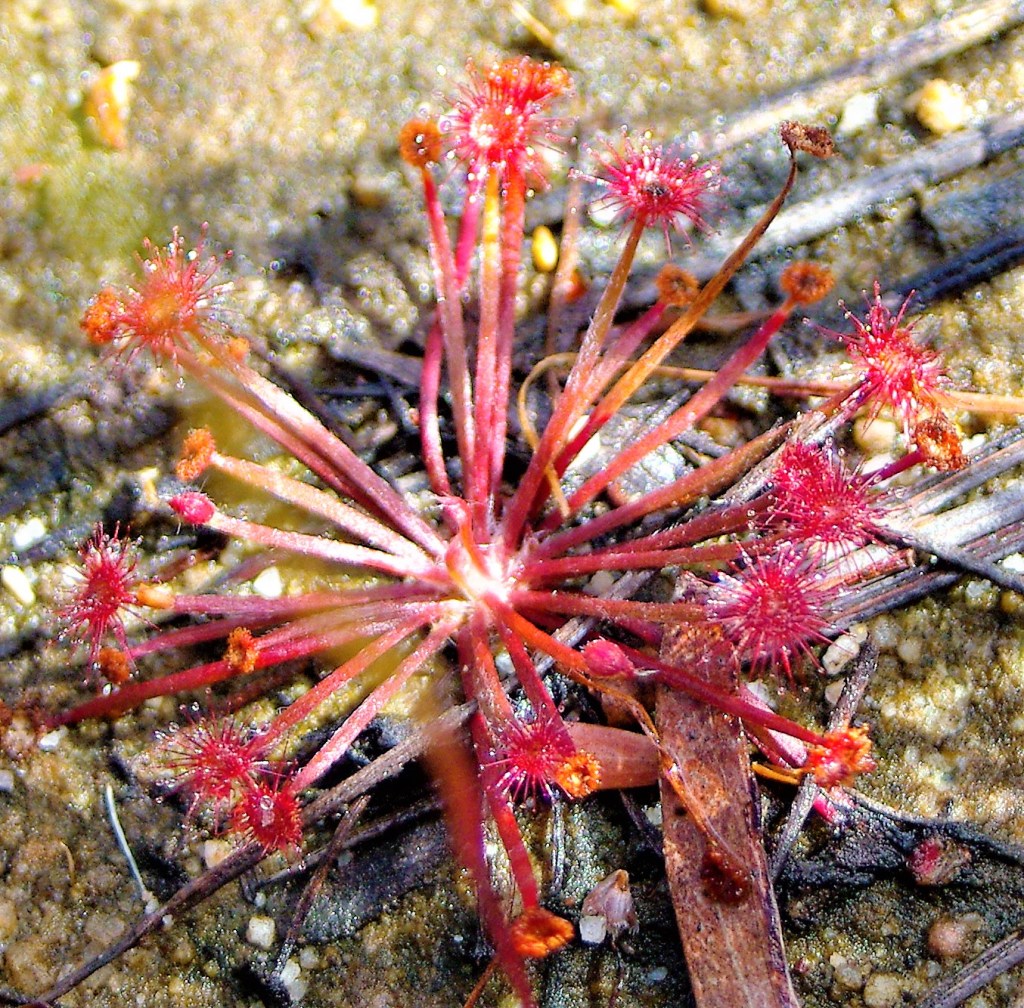
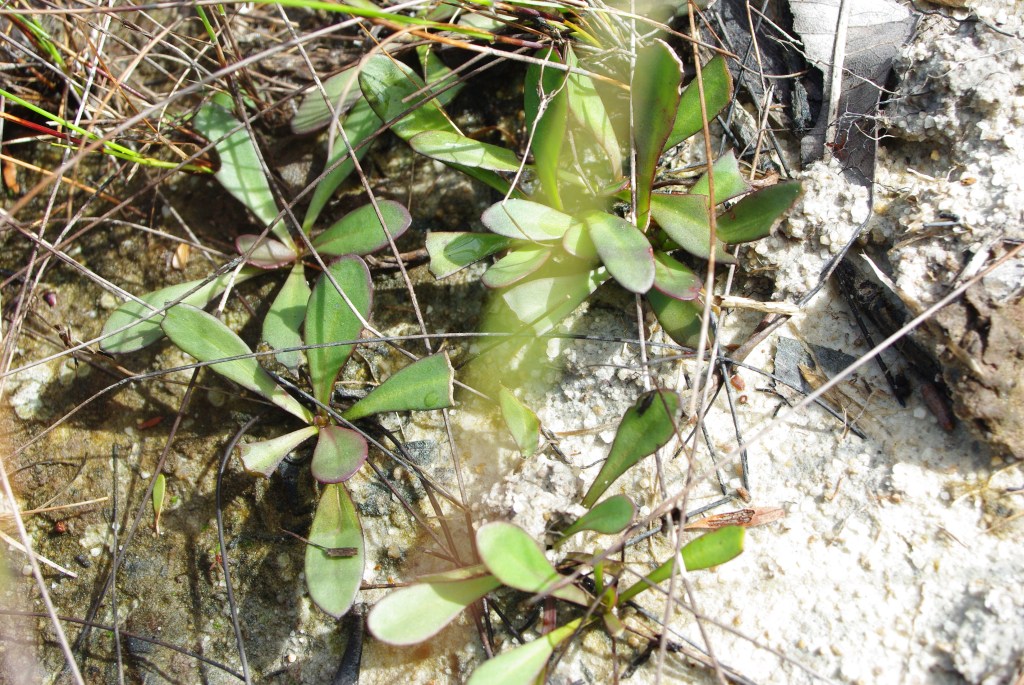
In the vicinity of Mt Tozer (543 m a.s.l.), an area of great significance to local indigenous owners, low heaths and associated nitrogen-seeking carnivorous sundews and pitcher-plants grow on poor soils derived from granite and from welded tuffs. Ant-plants (both Myrmecodia and Hydnophytum) grow on larger trees towards the outskirts of the heathland proper.


Situated close to the Torres Strait, it has been suggested that the Iron Range is a region where New Guinea and Australian flora and fauna meet. Stocker and co-workers (Stocker 1983, Stocker and Unwin 1989) considered that rainforest vegetation in a CSIRO plot near the Claudie River (Plot 42) exhibits a greater affinity with the rainforests of parts of southern New Guinea than with those in the Cooktown to Townsville region. There is also evidence for recent vegetational change. In places, notophyll vine forest has replaced grassy eucalypt forest that was maintained by Aboriginal fire management.
On 29 May 1789, after the Bounty mutiny, Lieutenant Bligh and 18 compatriots alighted upon Maʼalpiku Island, the first Australian island they came to during their 6,500 km voyage. Bligh called the island Restoration Island because the food they found restored their spirits and that date was the anniversary of the restoration of King Charles II. Much of the island is now Maʼalpiku Island National Park (CYPAL).

Ant-plants abound in the Kutini-Payamu National Park. Along the Old Coen track we identified Mymecodia beccarii, M. platytyrea, M. tuberosa and Hydnophytum moseleyanum. Often more than one species was present in a single tree. Hydnophytum ferrugineum grows in the vicinity of Mt Tozer.
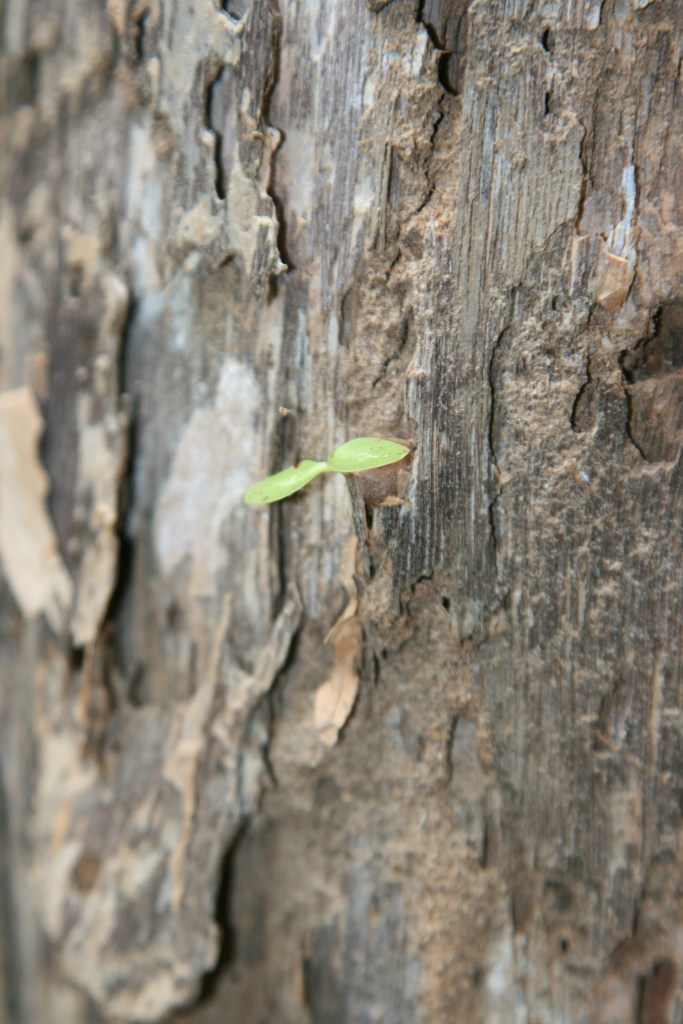
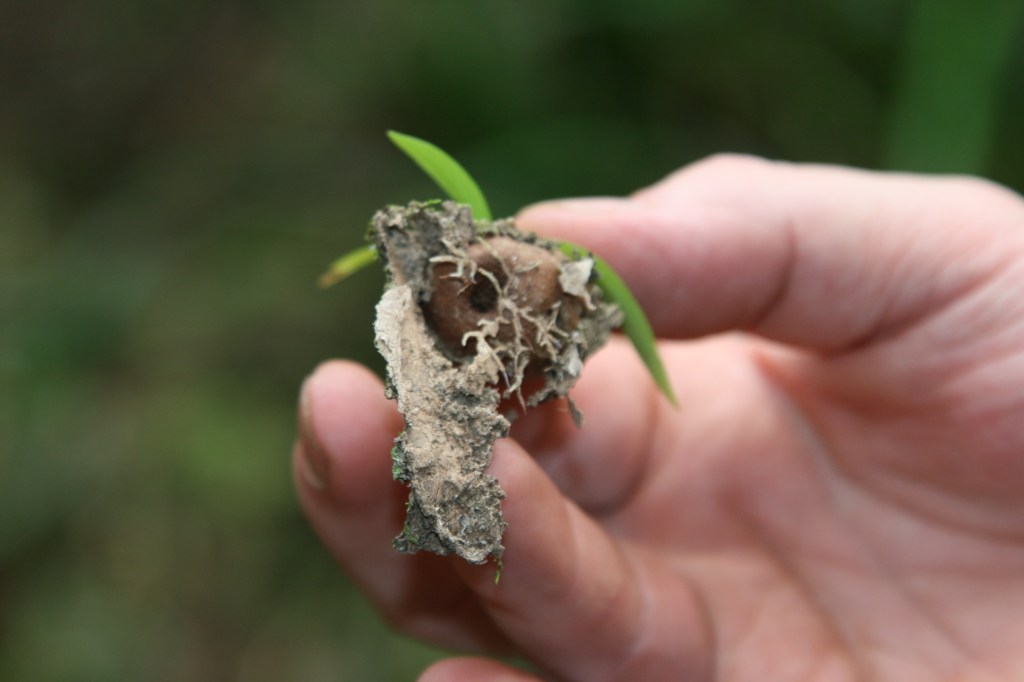
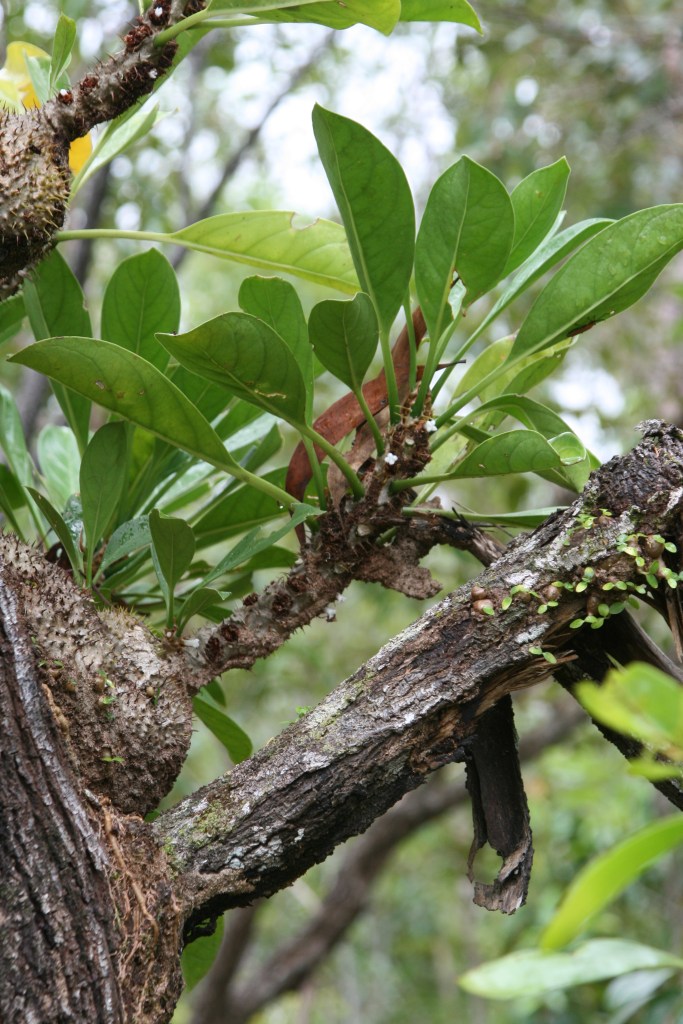
We saw evidence of young ant-plants growing in carton-covered ant passages (photos below). Their roots grew into the carton and their first major cavity was exposed inside the ant trail. We also saw groups of recently germinated ant-plants on trees, indicative of seed distribution by ants (as demonstrated by Sommer (1990) for M. beccarii and Phylidris cordatus).
Our attempt of a world first at measuring plant CO2 exchange over 24 h in a Myrmecodia tuberosa was an abject failure! During the night, the ants moved from the ant-plant into the Licor gas-analyzer where many were squashed into ant-Vegemite by the stirring fans! Evidently the ants liked the electronic vibrations. Delicate open-heart Licor surgery was required.


Another CAM ant-plant in the forests is Dischidia major, an epiphytic vine with hollow leaves in which ants live. The plant inserts roots into the leaf hollows in order to extract nutrients deposited by the ants. Dischidia is wind-pollinated, unlike Myrmecodia and Hydnophytum, and although ants may build their carton-covered passages to and from Dischidia plants (photo below) there is no record of Dischidia seeds germinating from the ant carton i.e. no evidence that ants are a vector for Dischidia seed dispersal.
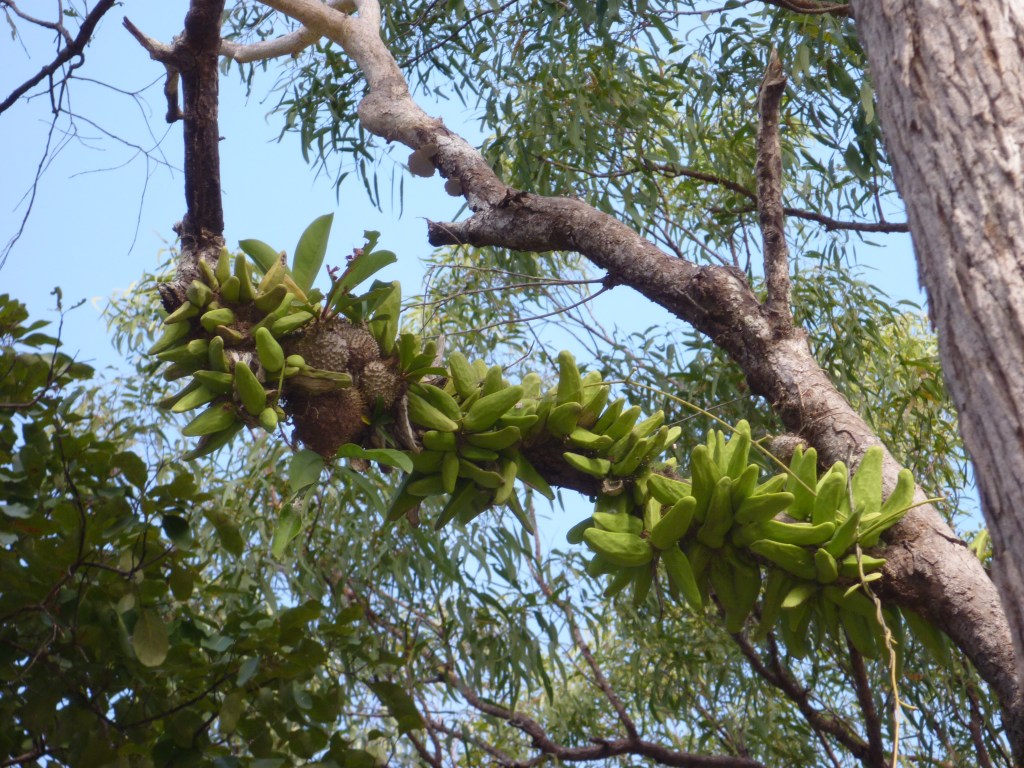
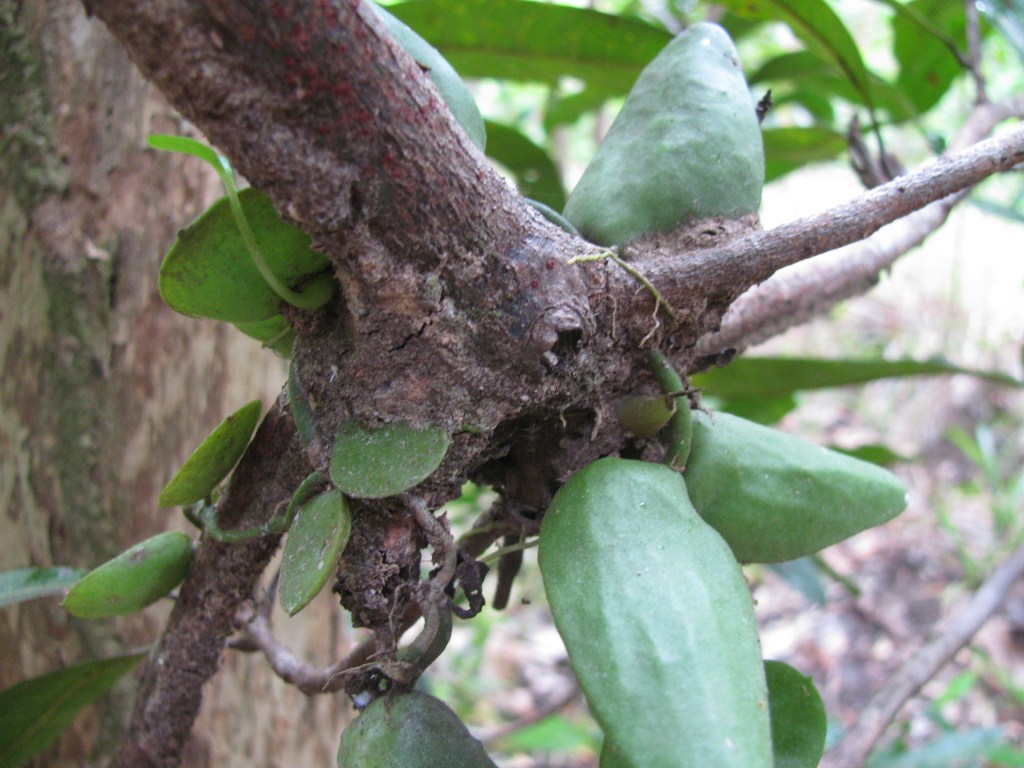
Herbivory of M. beccarii leaves in the photo above is consistent with the presence of larvae of the rare Appollo jewel butterfly for which the plant is the host (Forster 2000, Orr and Kitching 2010).
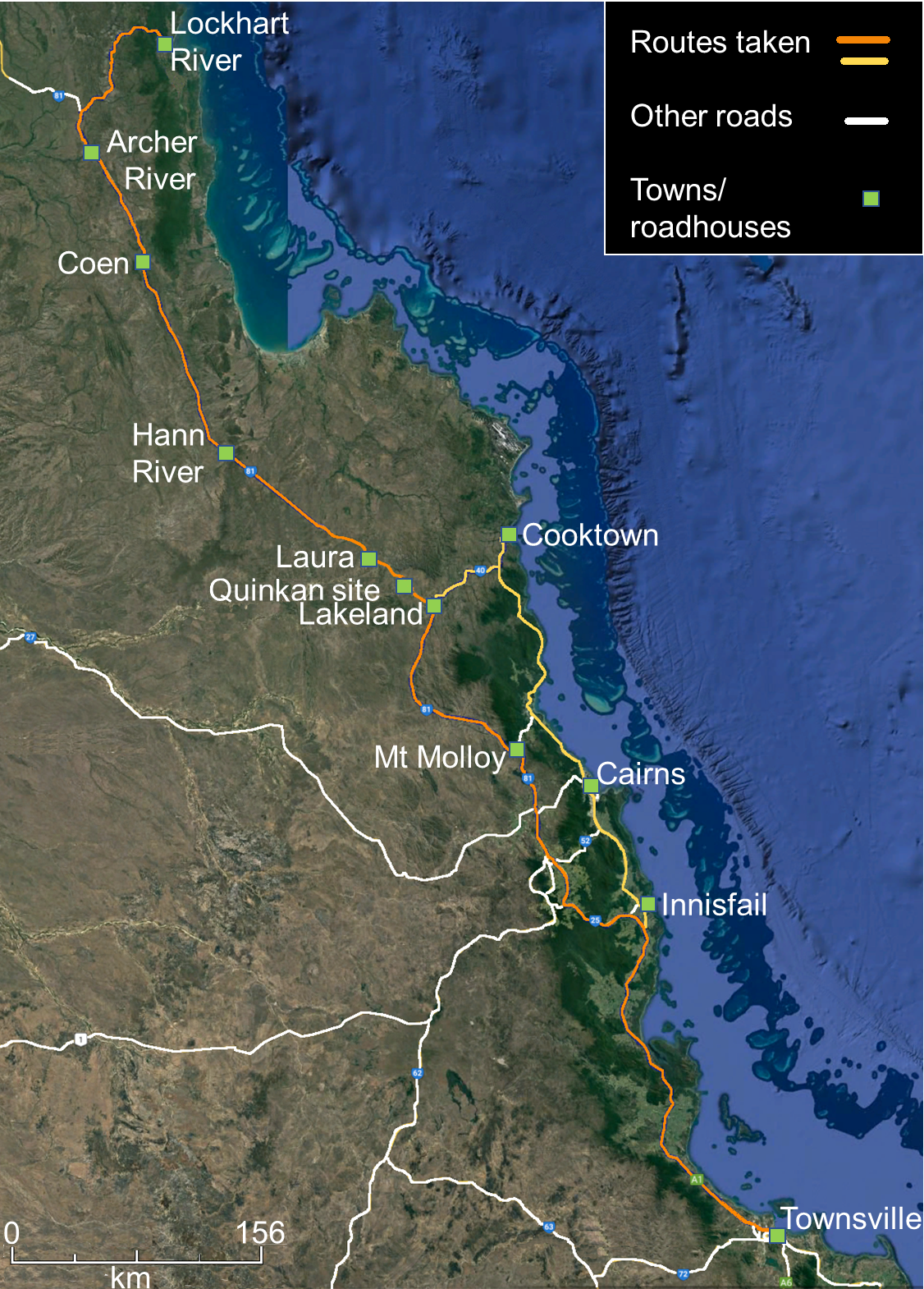
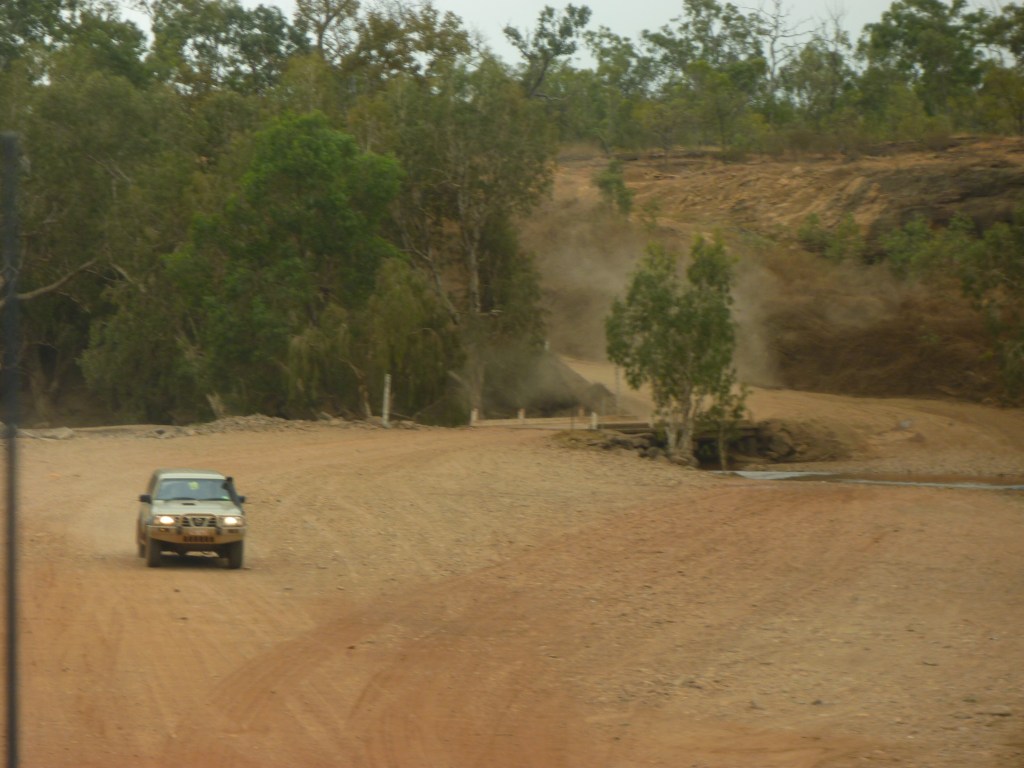
It was a longish drive, but not difficult. Bitumen to Coen across the eucalyptus woodlands of the central Cape. Thence dusty but well-graded roads, only one serious water crossing (across the Pascoe River). Closer to the coast the occasional moist or sandy patch. Only one flat.
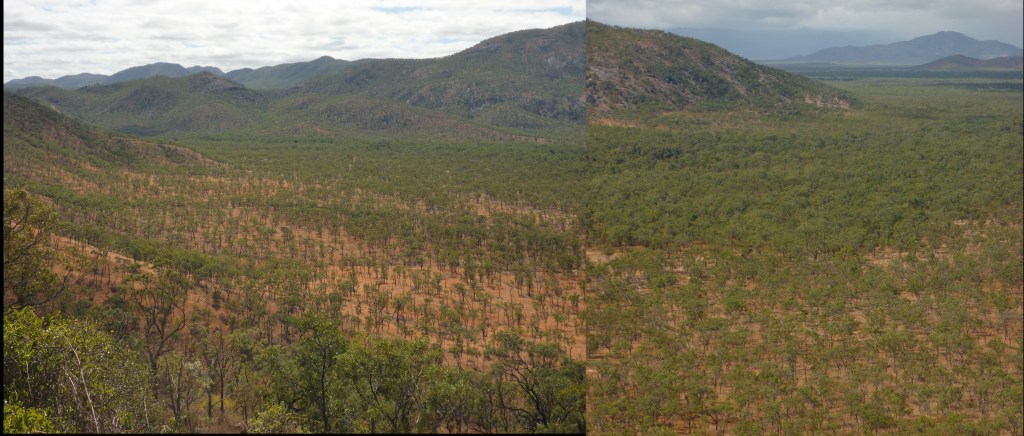
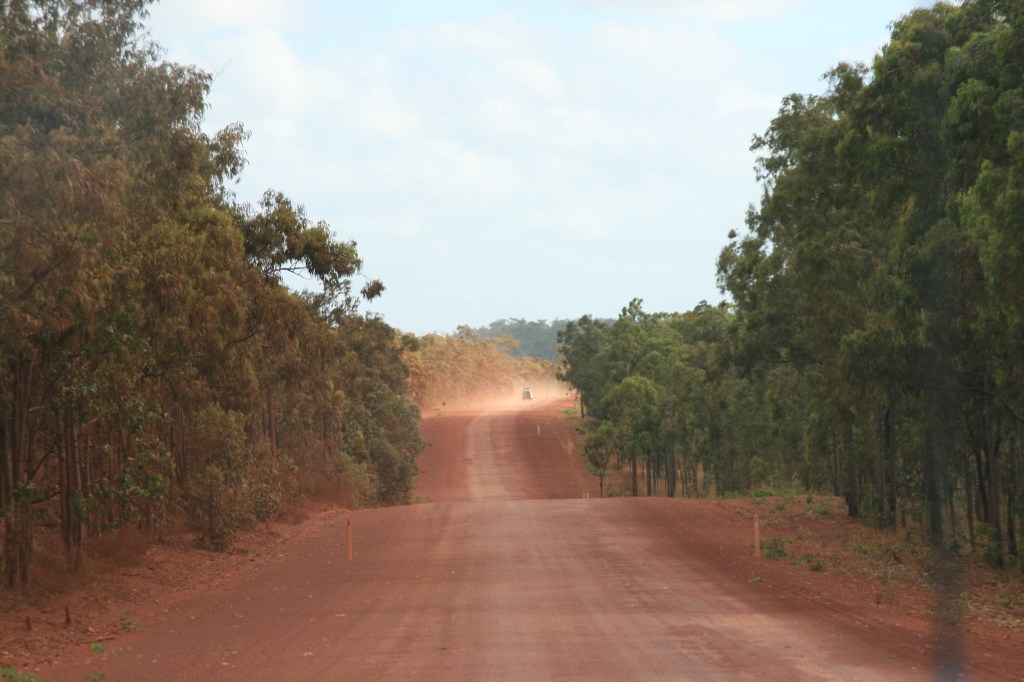

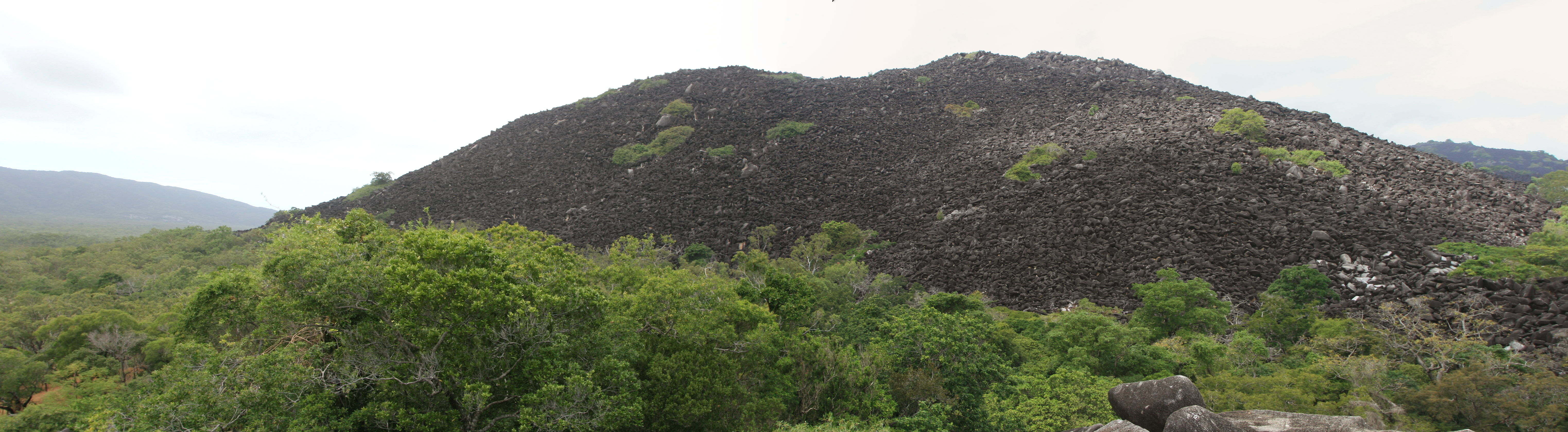
We camped at roadhouses, the rainforest site at Iron Range, pub at Laura, caravan park at Atherton, and visited Black Mountain near Cooktown.
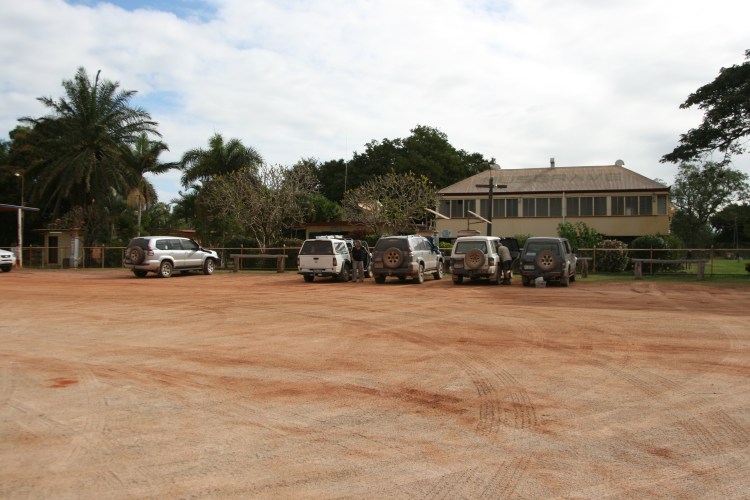
Joining the grey nomads at the Musgrave Roadhouse 
I think this is Musgrave – the car is still clean! 
Archer River comfort. 
Iron Range rainforest comfort – Edward Tsen and Joe Holtum 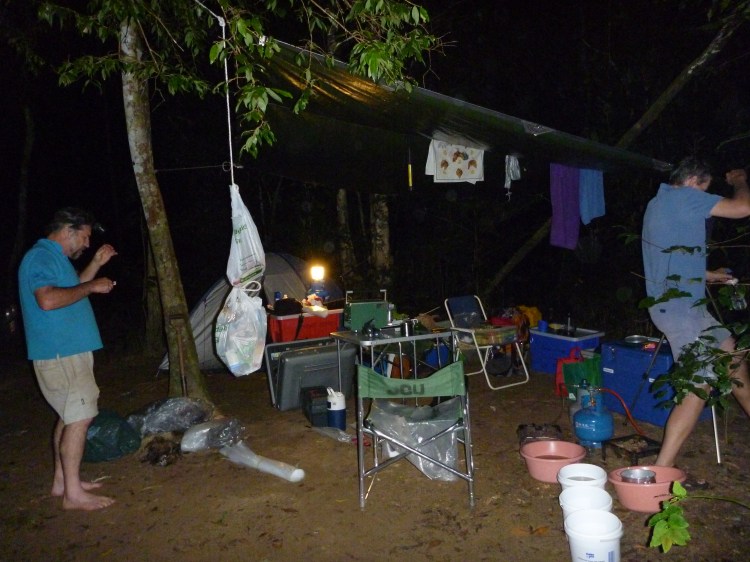
No campsite stays orderly when you are at work! 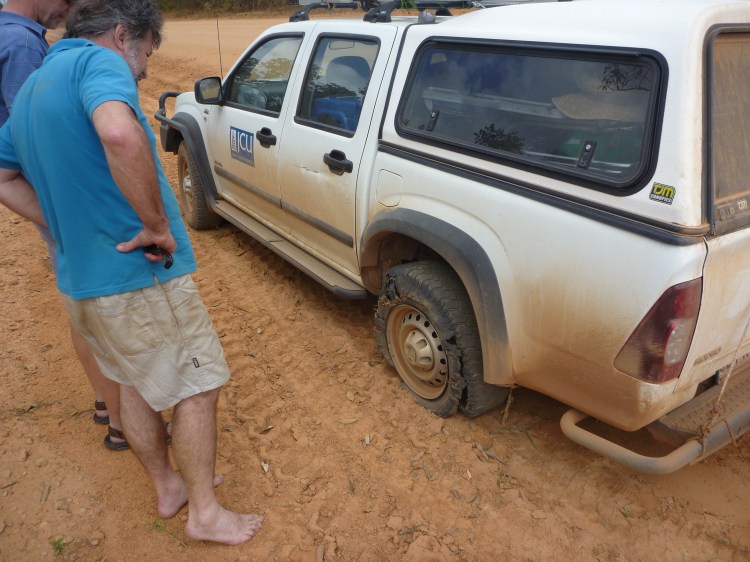
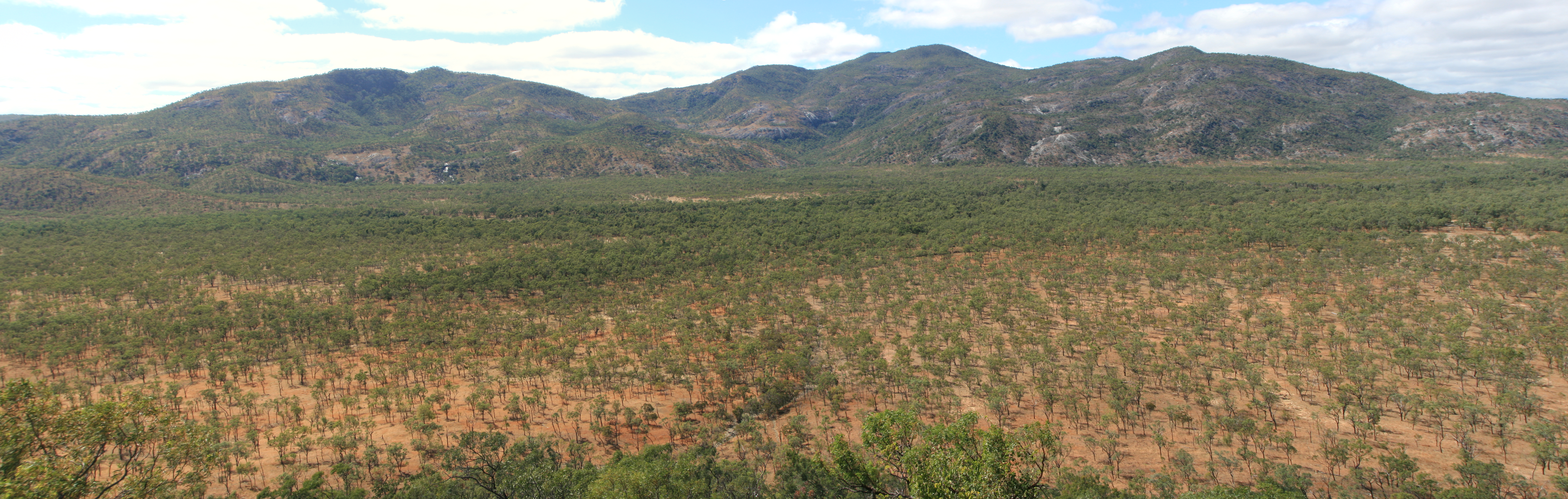
Tyre wall collapse – tends to happen when tyres get too hot on dirt roads. Black ‘Mountain’ near Cooktown The Eucalypt woodlands inland of the Great Dividing Range
During a scary moment on the Old Coen Track we were baled up by some baying pig dogs on the chase. Their handlers soon turned up to save the feeble academics. A photo below shows that the dogs got their pork!


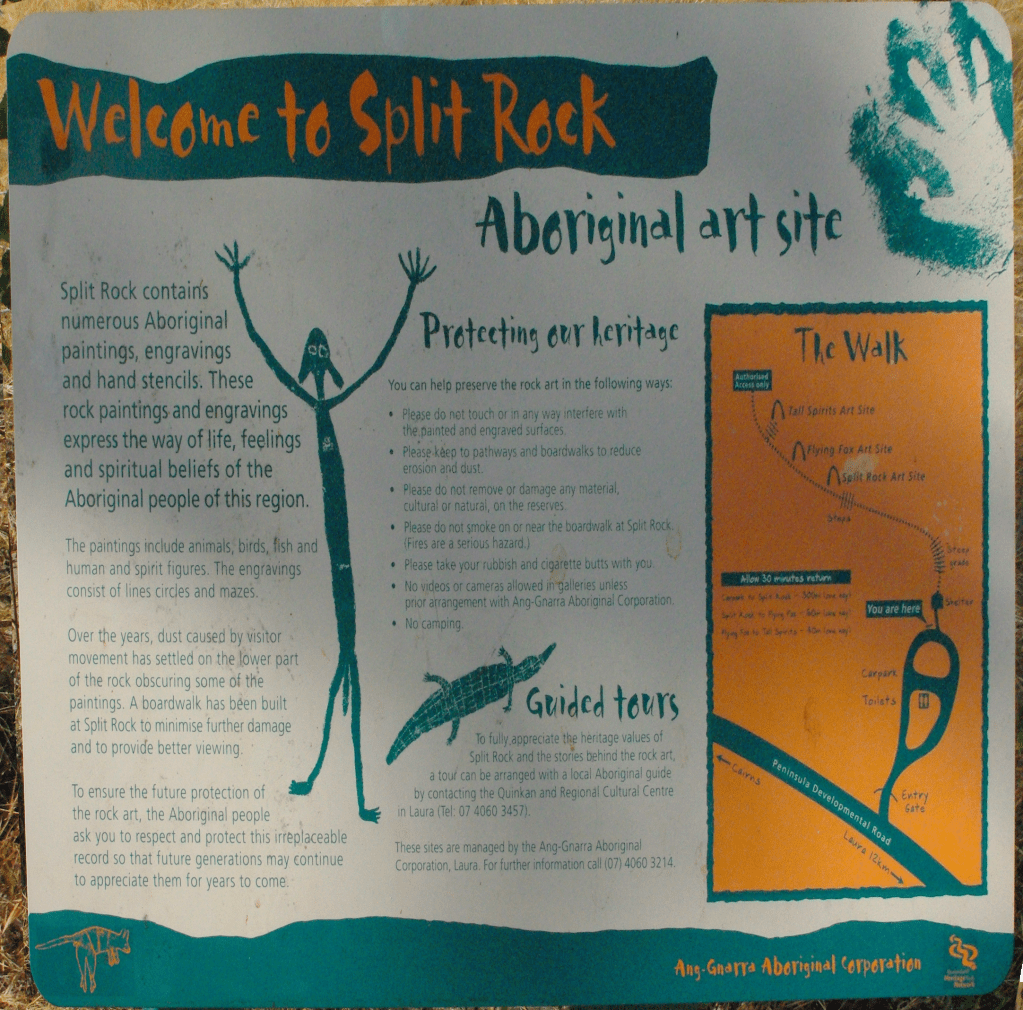
Split Rock, a sandstone formation containing rock paintings, is an amazing spot about 14 km south of Laura. The art features Quinkans, or spirit-being figures, and animal depictions. The traditional owners and managers of the site, the Ang-Gnarra Corporation, run interpretive tours (https://www.anggnarra.org.au/our-country/rock-art) not only at Split Rock but at other sites in ‘Quinkan Country’.
References
Orr A, Kitching R 2010 The butterflies of Australia. Allen and Unwin
Sommer ML 1990 A study of the mutualistic interaction between the ant, Iridomyrmex cordatus, and the plant, Myrmecodia beccarii. Honours Thesis, James Cook University of North Queensland.
Stocker GC 1983 Aspects of the dynamics of rainforests in north east Australia. PhD
Thesis, University of New England.
Stocker GC, Unwin GL 1989 The rain forests of northeastern Australia – their
environment, evolutionary history and dynamics. In: Tropical Rain Forest Ecosystems,
Biogeographical and Ecological Studies. (Eds. H Lieth, MJA Werger) Elsevier,
Amsterdam. pp. 241-259.
Webber BL, Woodrow IE 2004 Cassowary frugivory, seed defleshing and fruit fly
infestation influence the transition from seed to seedling in the rare Australian rainforest tree, Ryparosa sp. nov. 1 (Achariaceae). Functional Plant Biology 31, 505-516.
 Joe Holtum's Science Site